
Commodity Trading Explained: Who Buys, Sells and Moves Energy Worldwide
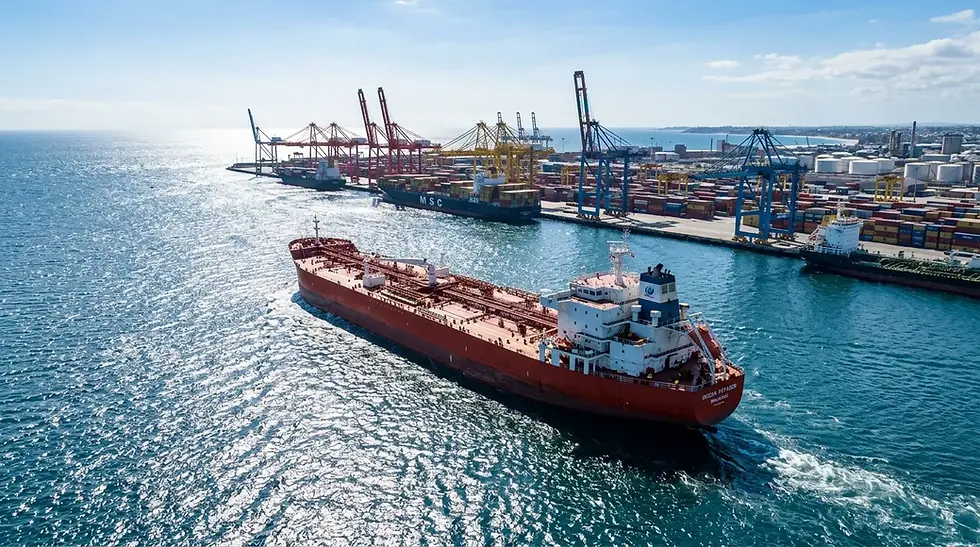
Commodity trading is the business of moving energy. It connects physical supply, transport, storage, and payment through contracts that define quality, quantity, timing, and delivery terms.
For B2B decision makers, the point is not to guess prices. It is to coordinate title, logistics, financing, and risk control so supply can move reliably from producer to end user. In energy markets, the main participants are producers, merchants, processors, end users, carriers, banks, and financial traders or swap dealers.
What commodity trading actually covers
In the cash market, physical oil is traded for prompt or near prompt delivery. Futures and swaps sit beside that physical market as price management tools: exchange trades are cleared through a clearing house, so price exposure can be managed without moving the cargo. How physical and paper trading differ in daily practice is a subject of its own.
A useful crude oil reference point is the first purchase, meaning the point where ownership transfers and volume is measured. It is a practical way to see where title, logistics, and payment start to overlap.
Main roles in the energy chain
Actor | Typical role | Why it matters |
|---|---|---|
Producer | Sells crude or gas at the first ownership transfer and may hedge future output. | It begins the physical chain, often at the point where volume is recorded and transferred. |
Trader or merchant | Buys, structures, stores, or resells volumes across locations or delivery windows. | It connects market information with timing, location, and quality so volumes can move where they are needed. |
Refiner or processor | Turns crude or feedstock into usable products. | Its economics depend on feedstock cost, product demand, and the ability to run material through the system efficiently. |
End user | Consumes energy or feedstock for operations, not for resale. | It values reliability, specification, and delivery certainty more than pure market exposure. |
Bank or trade finance provider | Supports payment and document control. | A documentary letter of credit pays against compliant documents, which helps separate commercial promise from payment execution. |
Carrier or storage operator | Moves cargo and absorbs timing gaps through vessels, terminals, and inventories. | Inventories and tanker transport are part of the market balance, not just logistics in the background. (eia.gov) |
Financial participant | Uses futures, swaps, or other derivatives to manage price exposure. | Financial participants add liquidity and hedging behavior around the physical market. |
At Nedjma, our NOOR-Trading division works across sourcing, contracts, compliance, and delivery for physical energy flows.
Commodity trading works only when the cargo, the documents, and the payment terms all line up with the contract.
How physical energy moves worldwide
Physical movement usually starts with a contract that fixes grade, quantity, delivery window, and documents. From there, cargo moves by tanker, pipeline, or barge, through terminals and storage, depending on the route and product.
The parties agree on specification, quantity, timing, and the documents needed for payment.
The cargo is loaded, measured, and handed over at the relevant transfer point.
Storage and inventories absorb the gap between production and consumption, which is why they matter so much in oil markets.
The buyer receives, processes, blends, or resells the product according to the contract.
Oil tankers move about 3 billion tonnes of crude oil and oil products by sea each year, so shipping is part of market structure, not just transport.
How risk is managed
Commodity trading is not only about price direction. It is about reducing uncertainty around volume, timing, freight, specification, and payment. Commercial firms use hedging to reduce price risk tied to current or anticipated exposure, while exchange clearing and contract structure help make that risk easier to manage. In the oil market, EIA describes a mix of physical participants, money managers, and swap dealers, which is one reason energy prices react to both fundamentals and positioning.
In Europe, position limits and position management controls are used to support orderly pricing in commodity derivatives and to reduce the chance that one position distorts the market.
Trade finance matters as much as price risk. Under documentary letter of credit principles, a bank pays against compliant documents, which helps bridge trust between parties that may be separated by distance, timing, or legal jurisdiction.
For broader context on market structure, energy operations, and digital execution, the company blog adds related material for B2B teams.
FAQ
Who buys crude oil and how are those purchases arranged in global energy markets?
Refiners are the most obvious buyers because they turn crude into fuels, but merchants and processors also buy, blend, store, and resell volumes. In global trade, the commercial terms usually fix grade, quantity, delivery window, documents, and payment conditions before the cargo moves. EIA’s first purchase definition shows the ownership transfer point clearly, while trade finance documents such as letters of credit help connect the commercial promise to the bank payment.
Who are the main players in energy trading and what roles do they each play?
The main players are producers, merchants, refiners or processors, end users, carriers, banks, and financial participants. EIA describes physical participants, money managers, and swap dealers, while CFTC sources explain that commercial firms use futures to hedge price risk. In practice, each player adds one function: supply, transformation, transport, financing, or risk transfer.
How does the physical energy market move energy around the world, from producer to end user?
The physical market moves through contracts, storage, transport, and delivery. Volumes are shipped by sea, pipeline, or inland waterway, and inventories absorb the timing gap between production and consumption. The same barrel does not change hands by magic. It moves through a chain of measured transfers, documentation, and logistics that keeps title and quality aligned.
How do physical energy traders earn a margin while managing risk?
In commercial terms, traders aim to earn a spread between buying and selling prices after accounting for freight, storage, quality, financing, and hedging costs. They do not rely on one factor alone. The practical skill is to combine market information with disciplined execution so that exposure is controlled even when prices move. That is also why position control, hedging, and exchange clearing matter in modern commodity markets.
What happens next?
If you are mapping a sourcing, supply, or trading workflow, contact Nedjma Corporation to discuss the next step, or start from the homepage.


