
UAE Leaving OPEC: Spare Capacity, Quotas and What Changes for Gulf Oil Trade
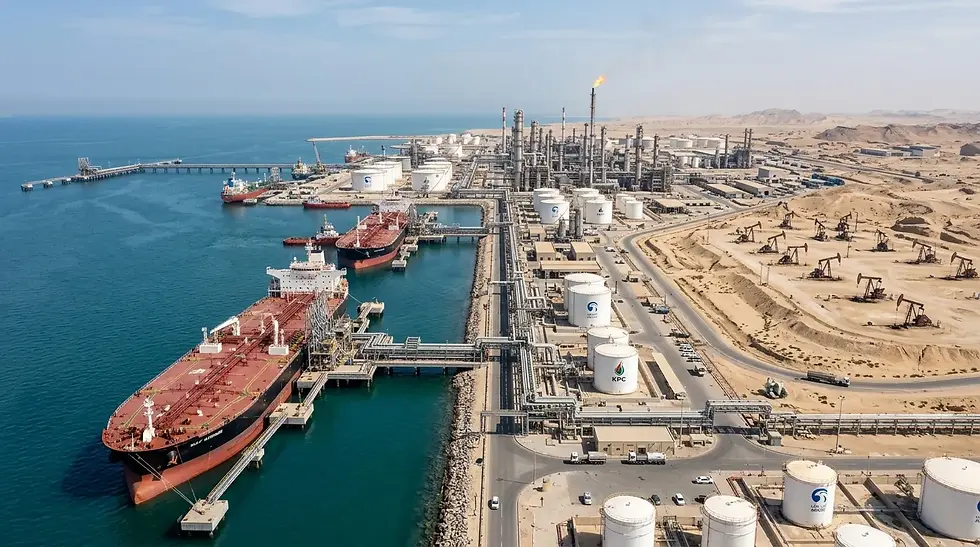
The UAE's OPEC exit changes the Gulf oil conversation.
Abu Dhabi announced that the UAE would leave OPEC and OPEC+ after a review of its production policy and current and future capacity. For B2B buyers, the key issue is how much of the UAE's flexible supply is now managed outside the OPEC+ quota framework and how that changes routing, timing, and risk.
Why the UAE Left OPEC and OPEC+
Abu Dhabi joined OPEC in 1967, and the UAE carried on the membership after 1971. The structural driver of the exit is the gap between what the UAE can produce and what a collective quota allowed it to produce. A producer that invests in new capacity wants to monetise it, and a quota framework built on monthly adjustments, conformity checks, and compensation for past overproduction limits how quickly that investment turns into exported barrels. Outside OPEC+, those decisions return to national policy.
That is why the exit is structural, not symbolic. Just before the announcement, the OPEC+ countries operating the voluntary adjustment system, including the UAE, were still holding monthly meetings, conformity checks, and compensation monitoring. In practical terms, the UAE stepped away from a shared system that was still active, and from the compensation mechanisms that came with it.
What Spare Capacity Means in Practice
Spare capacity has a precise meaning. EIA defines spare capacity as production that can be brought online within 30 days and sustained for at least 90 days, and it treats surplus capacity as output held back under a coordinated OPEC or OPEC+ agreement. That is why spare capacity matters in a disruption: low surplus capacity can put upward pressure on crude prices when supply is tight.
IEA estimates published shortly before the exit put the UAE's effective spare capacity at around 0.6 mb/d. Saudi Arabia held the larger buffer, but the UAE remained one of the few Gulf producers with meaningful operational headroom.
Pre-exit spare capacity positions
This pre-exit picture shows why the UAE was not a marginal producer inside the quota system. It had room to lift output, but not as much as Saudi Arabia, and the wider group depended on a small number of flexible barrels.
Producer | Spare capacity position | Why it matters |
|---|---|---|
UAE | Meaningful headroom, around 0.6 mb/d | Its exit removed a practical buffer from the bloc. |
Saudi Arabia | The largest buffer in the group | The bloc's remaining flexibility rests largely on this buffer. |
OPEC as a whole | A limited pool concentrated in a few producers | This is why the UAE mattered to the group's overall flexibility. |
That is also why nameplate capacity is the wrong mental model. EIA does not use it because it can overstate available output after degradation or disruptions. For buyers, the useful question is not theoretical peak output, but what can be delivered on schedule, through the right route, and without breaking the contract chain.
What Changes for Gulf Oil Trade
What changes for Gulf oil trade is mainly the balance between physical routing and policy coordination. In any disruption to Hormuz transit, Saudi Arabia and the UAE are the regional producers with pipeline routes that bypass the strait, and the UAE's route runs to Fujairah (our blog covers the Fujairah hub in more detail). The UAE already had route optionality, so the exit mainly changes who sets the production framework, not whether the barrels can reach the market.
For pricing, the shift is more likely to show up in freight, term structure, and buyer access than in a single headline benchmark, because UAE barrels remain tied to physical export access rather than to membership status.
At Nedjma, we read this as an intelligence before execution problem, and our NOOR-Trading division supports that chain from market monitoring to structuring and execution.
Three practical effects stand out for B2B buyers and traders:
Trade teams will watch Fujairah loadings and other non-Hormuz routes more closely, because route resilience is now part of supply reliability.
Contracting may put more weight on shipping windows, storage optionality, and delivery terms, because physical access can matter more than the formal quota number.
Monthly OPEC+ signals still matter for the wider Gulf balance, but they now matter less directly for UAE barrels.
Pricing, Stability, and the Limits of the Shift
The exit should not be overread. It does not remove field constraints, shipping bottlenecks, or maintenance schedules, and it does not abolish the market's reliance on spare capacity as a shock absorber. EIA's framework treats spare capacity and disruptions as the variables that matter when supply is tight.
It also narrows the circle of large flexible producers inside the OPEC+ system, so the group's stabilising burden becomes more concentrated as the UAE operates outside the quota structure.
For market participants, the lesson is simple. Route access, terminal availability, cargo timing, and counterparty discipline will shape Gulf flows more than the headline of leaving OPEC alone. That is why supply intelligence and execution planning now sit side by side.
FAQ
What does UAE leaving OPEC mean for spare capacity and quotas?
Spare capacity is the part of output that can be brought online within 30 days and sustained for at least 90 days, and EIA treats surplus capacity as production held back under coordinated OPEC or OPEC+ arrangements. In practical terms, the UAE had meaningful headroom before the exit, so leaving OPEC and OPEC+ removes that headroom from the bloc's monthly quota and compensation machinery. It does not erase the physical capacity itself, but it does change who decides how it is used.
How will UAE's exit from OPEC affect Gulf oil trade and pricing?
The first effect is on routing and contract execution, not on a single price number. UAE barrels can still reach international markets through an export route that bypasses the Strait of Hormuz. Pricing will continue to reflect freight, access, and benchmark liquidity, while the exit mainly reduces the importance of OPEC+ quota signals for UAE cargoes.
Will UAE monetize its spare capacity now that it's out of OPEC?
It may, but that is not guaranteed. The official UAE statement said the decision followed a review of current and future capacity and was tied to national interest and market needs. That language suggests more freedom to align output with commercial opportunity, but actual volumes will still depend on field performance, shipping access, maintenance, and demand from buyers.
How does UAE's departure influence OPEC+ quota dynamics and market stability?
It narrows the group of large flexible producers inside the quota system. Before the exit, OPEC+ still relied on monthly meetings, conformity checks, and compensation monitoring, and the UAE was part of that process. Removing a meaningful spare capacity holder from that structure leaves more stabilising responsibility on the remaining members, while the market still depends on stocks and alternative routing to absorb shocks.
Why is nameplate capacity the wrong measure for buyers?
A nameplate figure describes theoretical peak output, and fields rarely deliver it once degradation or outages are counted. Buyers should plan around deliverable barrels: volumes that can load inside the contract window and move through an available export route.
What Should B2B Buyers Watch Next?
For trade desks, the next watchpoints are route access, spare capacity signalling, and contract structure, not live price guesses. If you need a structured review of Gulf flows, explore the home page, or contact Nedjma Corporation to discuss a project.


